Friday, July 13, 2007

Why Pre-Construction Properties Need To Be Purchased At A Discounted Price In An Emerging Market.

Pre-construction investing is a popular option for many property investors. Basically it is when an investor commits to buying a property before it is built.

The investor is virtually buying a piece of vacant land where a development project is planned to be constructed. In most cases construction happens within 12 to 24 months.

Success when investing in pre-construction properties generally relies on two important points:

  1. Committing to a pre-construction property at a discounted price on the front end.
  2. Buying in an emerging market.


Buying a pre-construction investment often comes at a lower price. The pre-construction investor can usually lock-in the purchase price at a lower level than after construction has been completed, or in some cases, before it has commenced. Developers often complete a development in stages and it is to the developers advantage to have firm sales confirmed in advance of construction. For the developer it provides a level of certainty and security on which to finance the project.


If there are several units/apartments within the development, prices will usually continue to increase from one stage of the development to the next stage.


During each stage of construction an investment property will generally appreciate in value. However, this is not always the case, so it is important to understand the particular market at the time you are investing.


To buy a property with potential to appreciate in value during the construction phase it usually pays to invest in either a market that is currently appreciating, or a market that is predicted to appreciate in the near future.


Buying Without A Mortgage


Buying a pre-construction investment doesn't always require a mortgage, because payments are not always required during the construction phase. Construction may be completed with the developer’s own financing. The property investor may not even require mortgage financing until the property is completed. It depends on the terms conditions of sale. This can provide an opportunity for a quick capital gain if the investor decides to on-sell the property prior to completion. The property investor may never need to obtain a mortgage because he/she sold before payment was required.


Buying a pre-construction property can have several advantages including: purchasing at a discounted price on the front end, delayed settlement until construction is completed, potential for an appreciation in value during the construction phase, and the possibility of disposing of the property at a profit before full payment is required.


This is why pre-construction investing can offer some distinct advantages over other types of real estate investing. This explains why experienced real estate investors often have a couple of pre-construction properties in their porfolio. Buying and holding pre-construction properties can free up time and money for the investor to concentrate on buying other types of real estate investments.


The key to profiting from buying pre-construction properties is identifying an emerging market that is soon to appreciate in value and committing to purchase with little or no money down.

Investing Techniques To Reduce The Risks

People often think that investing in real estate is the fast way to riches. Well, it can be, but more often than not success with real estate investing is the result of a lengthy apprenticeship. The lure of "fast money" traps many new investors because they lack the knowledge to buy the right investment properties. Failure is caused by bad decisions, lack of action and unrealistic expectations. Mistakes can be costly!

Real estate investing should be treated like an occupation or career. The more knowledgeable and experienced you are - the more likely you are to succeed long term. Even the newbie investor can make a quick buck but the real test is in making consistant profits.

Anyone contemplating a career in real estate investing should do everything he or she can to learn the ropes. Go to seminars, read real estate books, real estate articles, listen to audios, videos on real estate investing and pick the brains of successful property investors.

Success in property investing requires knowledge of investing techniques, acquisition, negotiating, financing and a strong knowledge of the local real estate market. Good knowledge and experience can reduce the risks when investing in property.

Remember, it is not a race. It is more important to make the right decisions than to try and buy lots of properties in a short time. It doesn't matter if it takes a year to buy the first property as long as the decision is the right one.

However, at some stage the deal needs to be made. No one makes money just talking or thinking about buying a property - the action of buying a property is what sets the wheels in motion.

Thursday, July 12, 2007

Real Estate Investor Tips For Hunting Out Undervalued Properties

Before starting a search for an undervalued investment property to buy, it pays to start by setting some guidelines. Don't just think about what you want - write things down.

Calculate precisely what profit margin you want to achieve in each a real estate transaction and remember to budget for agents fees, closing costs, real estate solicitors fees etc. Always allow a buffer to cover any cost over-runs and allow a budget for your own time associated with each task. You will probably want to calculate how many hours you are prepared to work on the bring the deal to fruition and how many hours you might need to spend working on the property. Put a value on each hour - do you want to work for $10, $20 or maybe $50 or $100 per hour. You don't want to undervalue your time!

Hidden costs can be a problem for the inexperienced property investor (and someimes the experienced investor too!). Things don't always go to plan and a property returning a $4000 profit might end up taking months of extra work. Preparing a budget for your time won't mean you alway get it right, but it will make you think about what is likely to be involved and perhaps save you from forgetting to allow for something.

That is why it is so important to write things down and do the investment math - it becomes a form of personal discipline.

Developing an action plan and a budget for both time and money will help to determine the likely profit level before you even purchase the property. If the figures don't stack up - you don't buy the property. You simply move on to other potential investment properties until you find one that is undervalued and where the numbers do stack up.

The main thing when buying investment properties is not to be driven by emotion. Don’t be in too much of a hurry or be over-eager to close the deal. It usually pays to have a couple of experts you can call on if you are unsure of how much work might be required to bring the undervalued property up to standard. Finding an undervalued property is only one part of the equation, the potential profit can quickly disappear in unforeseen building repairs, plumbing, electrical work, replacement of fixtures and fittings, landscaping, legal costs...the list goes on.

When negotiating a property deal both the property investor and the seller come under a lot of pressure. If you have done your property research and investment math in advance, you'll know exactly how much you can afford to pay for the property. The pressure can come off you, because you know your limits and won't be pressured into accepting something that is not in line with your investment budget. Remember too, just because an investment property is undervalued doesn’t mean the seller is resigned to getting the short end of a deal.

Successful real estate investors usually focus on the investment properties that will net them the biggest return for the least amount of time and effort.

It is often said that you make your money when you buy not when you sell. The key is to buy right and not be driven by emotion in to paying more than you can afford.

Here is another useful real estate investment resource.

Every Sale Needs A Motivated Buyer And A Motivated Seller

There is an old saying "it takes two to tango", and this definitely applies when buying and selling real estate. To facilitate a successful sale there needs to be a motivated buyer and a motivated seller. If the seller is not motivated then he or she might hold out for an unrealistic price out of line with the true market value of the property. An unmotivated buyer will usually walk away rather than negotiate a fair price and terms.

The serious property investor is usually on the prowl for not only a good property to buy, but also he or she is seeking out sellers that have a motivation to sell. Better still, if the motivation is to sell quickly, because a quick sale often equates to a cheap price. That motivation could be the result of a recent divorce, financial difficulties, or perhaps a job relocation or family illness or bereavement. Although some people view this as taking advantage of someones misfortune, often the property investor is doing the seller a big favor by solving his or her problem quickly and with the least amount of stress. These situations are often emotional and the property investor is wise not to get too involved with the reasons behind the house sale.

Searching For Undervalued Homes To Buy

Thousands of property investors are constantly searching for undervalued homes that can be bought and sold for a profit.

Finding undervalued homes can sometimes be a difficult task especially if there are several property investors chasing after the same properties.

The key to property investing is to have a plan of action, staying focused and being persistant, because finding a suitable undervalued property is often the most difficult part of the whole real estate investing process.

Property investors need to be realistic and they shouldn't expect to successfully buy every undervalued property they go after.

The important thing is that every property purchase is slightly different and is a useful learning experience in developing a more discerning real estate investing eye.

Wednesday, July 11, 2007

Mortgage Underwiter Eliminates Potential Fraud

If you are thinking of applying for a loan package to purchase a property, try and view the situation from your lenders perspective as well as your own.

Prior to giving approval for your loan package, most lenders will be concerned not only with your ability to service the loan (repayments and interest payments), but also how you plan to source the funding for your initial down payment and closing costs.

The mortgage lender a cash flow statement for your budgeted income and outgoings as well as an historical cashflow statement covering the last two or three months.

You may need to supply details includeing: savings accounts, checking accounts, certificates of deposit, money market funds, mutual funds, stock statements, retirement accounts etc.

The mortgage lender might want to see what major transactions have been made and what money has been moved between accounts during that time. They will be particularly interested in any large withdrawals and large deposits.

The person approving the loan (the mortgage underwriter) will probably require a complete audit trail (paper trail) of all deposits and withdrawals. The mortgage underwriter may also want to see deposit receipts, cancelled checks.

Although this can be an exasperating process for the lender, having to find the necessary documentation, it is done for very good reason. It is all about quality control and the mortgage underwriter will be trying to identify or eliminate the potential for fraud.

Depending on the rules in the country where you live, it is usually a requirement that loans completely document the source of all funds.

Tuesday, July 10, 2007

Ask for the right documents when selling your home

The first thing you must do when you decide to sell your home is contact your Title Company or Real Estate Attorney. They should be able to supply you with all the necessary forms and documentation.

It is absolutely critical that you get up to the minute advice and guidance from your Real Estate Attorney. You are going to need to make contact with your Attorney anyway, so in my opinion the sooner you do that, the better. Secondly laws and regulations can vary from state-to-state and country-to-country, so it is best you get advice and forms from an Attorney in your town. Also, the complexity of transactions can vary from sale-to-sale. It is really important that the contract and documentation you use is appropriate for your particular circumstances. Again your Attorney can help.

You will need to be pro-active to make things happen correctly.

Write a mortgage payoff request letter

Before proceeding to sell your property you will need to obtain all the details about the status of your current mortgage (if you have one). You’ll need to know the balance owing and if you need to comply with any special clauses or conditions.

It is wise to get this information in writing so that there is no confusion or risk of a serious mistake occurring. Don’t just phone your bank or mortgage company – WRITE to them.
If you have a FHA loan, then it is really important that you notify your mortgage company of your intention to repay the mortgage. If you don’t do this, they may charge you an extra months interest. Check all these kinds of details with your Attorney or Title Company.

For more mortgage loan information and definitions of mortgage terms check out this helpful real estate resources website http://www.your-real-estate-resources.com/mortgage-terms.html

Real Estate Wants And Needs When House Hunting

Before starting your search for a property to buy think carefully about your wants and needs. Get a piece of paper and decide your priorities. Think about:

- Price range

- Building style/design

- Newly constructed

- Remodeled older home

- Fixer upper in need of renovation

- Minimum bedroom number

- Garaging

- Off street parking

- Room for relatives to stay

- Bathroom number

- Family room- Fire place

- Office/den

- Hardwood floors

- Swimming pool / Spa

- Workshop

- Central air conditioning

- Work locations

- Special zoning or location

- Yard size

- School district

When doing your home search here are some other things to consider:

- What are your day to day and future needs?

- A condo or townhouse will relieve you of yard work and exterior maintenance.

- Do you enjoy repairing things and doing maintenance?

- A PUD may have private recreational facilities such as a pool and play parks.

- Larger lots can give room for additions, play areas, outdoor living and swimming pools.

- Older houses have great charm, but may need updating.

- New homes offer the latest design features and are often more energy efficient.

- A fixer upper can dramatically increase in value.

Tips For Buying Bank Foreclosure Houses

Thousands of property investors make thousands of dollars from buying foreclosure properties. There are some useful investing tips in this article by Albert Lee.

There are many people out there who want to purchase real estate properties. The problem is, they just do not have enough money.

So, rather than enter into a binding contract to purchase a brand new house just to have it foreclosed because of failure to pay, why not purchase a foreclosed property right away?

Foreclosed houses are real estate properties that have been foreclosed by the lending companies or the government because of the failure of the owner to pay their loans or mortgages.

As such, whenever a banking institution or an agency end the long and complicated legal process with the foreclosure, they have to sell it off right away to get the proceeds and apply it to the terms of the contract.

This reality is actually one that most households face nowadays because of failure to properly manage finances and due to the difficulty in the economy.

Despite the sad picture of foreclosure, it should not keep you from purchasing these properties. Actually buying foreclosure houses is a good way to turn a sad thing into a wonderful opportunity. Make some good out of it.

Buying Foreclosure Houses

To secure a foreclosure house, it is best to utilize the various sources that will lead you to the perfect find.

Banks have listings of their foreclosures. There are also agents and brokers who can aid you in finding these properties. Government agencies also post announcements on their public auctions. The internet too is a good source of information.

These sources will lead you to venues and properties that can get you that foreclosure house. Do not hesitate to utilize these sources. You might just hit gold.

Some opt to survey for pre-foreclosure properties to purchase it directly from the owner. However, be cautious of doing this option. The case might be involved still in a long process.
To be sure, simply stick to the properties already foreclosed.

The good thing about buying foreclosure properties is that they can give you the best deals for houses that you can not ordinarily get at lower prices.

Most of the time, the foreclosed properties are sold at lower prices to be able to dispense with them more easily. On the average, they are sold only from 5 to 50 percent of their total fair market value.

Banks have to get the proceeds right away to apply it to the contract and put the money again into circulation.

Here are some tips to consider when buying bank foreclosure properties.

1. To Resell or to Keep?

When scouting for bank foreclosure properties, decide whether it is something you will resell or something you would like to keep.

This will aid you in picking the right find. Some houses can easily be repaired for reselling purposes because the next buyer can take care of the other details.

However, it may take considerable time and effort if the house is something you want to keep.

2. Repair and Resell

Foreclosed properties have previous owners who are in financial troubles, thus the upkeep is usually not maintained. This is one reason why they are also sold at lower prices.

Sometimes, this condition requires ordinary repairs and make over. Carefully consider this aspect in evaluating your purchase, whether it can give you enough room to earn.

3. Do a Little Research

Sometimes you cannot simply depend on the fact that foreclosed properties are sold at cheap prices. Do a little research to know if you can really make a good buy.

There are properties that sound inexpensively priced but they will not sell high as well despite the repairs because of their location or neighborhood.

Just take the extra mile to research. You can even seek help from an assessor to make sure that you have a good deal.

Conclusion

Bank foreclosure properties can definitely help you make a good buy in real estate properties and still have lots of savings. So do not hesitate to utilize this option. Make something good out of this promising venture.

For listings of bank foreclosure properties, please visit www.real-estate-foreclosed-home.info

Monday, July 09, 2007

Baby Boomers And Young Professionals Set Real Estate Trend

The real estate industry is built around market trends be they upward, downward, or trends in the style or location of properties being bought and sold.

A recent trend is for many younger professionals to move from the city to buy a property in the suburbs. One of the main causes is the ever increasing property values in the most city centers and the desire to start a family.

This property trend is somewhat offset by another trend in property buying. Many Baby Boomers whose children have left home are now buying property in the city. They want the convenience of being close to cafes, restaurants, entertainment and to get away from lawn mowing and other maintenance tasks associated with suburban living.

Their old family home is now too big and too much work for these Baby Boomers. Many also have built up lots of equity in the family home and have paid off most, if not all, of their home mortgage. With capital behind them, these Baby Boomers are well positioned to pay the higher cost of new development condos and lofts in the city.

Some Baby Boomers even enjoy the best of both worlds by keeping their suburban family home and also buying a city apartment.

So, when you think about it, both these trends effect each other. The young professionals are buying the family homes previously occupied by the Baby Boomers and the Baby Boomers are filling the gap in the city.

Beware of Mortgage Refinancing Traps.

If you are thinking of taking out a mortgage or refinancing an existing mortgage then this article on mortgage refinancing trap by Christine Carter will definitely be of interest.

Some lenders use devious methods to attract new customers. Know those tricks to avoid becoming their prey.

The mortgage lending business is highly competitive. And that, my dear reader, is an understatement. It is like saying that the Pacific Ocean has many gallons of water in it. Even Donald Trump this week decided to enter the mortgage arena with the hyped up launch of Trump Mortgage from Las Vegas.

With literally thousands of companies all competing for a finite number of borrowers, the temptation exists to use tricks, gimmicks, and even outright deceit to obtain more home purchase or mortgage refinancing customers. Most people like to assume that their doctor, dentist, pastor and banker are all fine upstanding citizens above reproach and would never resort to deceit for personal gain.

While that might be true for your doctor, dentist, and pastor, it likely might not be true for your banker, especially if your banker is advertising online with below market "introductory" rates. As with most things in life, if it seems too good to be true, it probably is. Banks, like most other businesses, exist to make a profit. If they are offering below market rates, you can bet your hard earned dollars that they will be getting their profit in some other manner.

It is those other hidden ways in which lenders try to profit that you need to guard against. These other ways are usually buried in the fine print of the paperwork, and more often than not are more expensive than simply opting for the current prevailing interest rate.

Trap 1: Prepayment Penalty

For many years prepayment penalties all but disappeared from the mortgage lending scene. Unfortunately, they are making a comeback. Usually prepayment penalties are inserted into the loan documents by the lender to get additional profit. This is especially true if you have a below market interest rate. What the lender would have received in interest payments is instead received as a prepayment penalty when you pay the loan off early (and early can be any time before your last payment is due 30 years from now).

Trap 2: Negative Amortization

Have you seen a mortgage refinancing advertisement offering incredibly low payments? Do you wonder how any lender can offer payments of under $500 per month on a loan in excess of $200,000? The answer is negative amortization. This occurs when the monthly payment isn't sufficient to pay the entire interest payment each month. The unpaid interest gets added to outstanding loan balance each month, and the result is that the outstanding balance on your loan increases each month, rather than the standard decline.

If you initially borrow $200,000, but your low monthly payment doesn't cover the entire interest due each month, several years later when you sell your house or refinance it, you end up paying the lender a great deal more than $200,000. Also, these loans most often carry a higher rate of interest than the current prevailing rate. This happens all too often because borrowers tend to focus primarily on monthly payments and overlook most other details of the mortgage loan. Borrower beware.

Trap 3: Initial Low Interest Rate, Subsequent Above - Market Rate Thereafter

Credit card companies are notorious for this offer, and their mortgage lending cousins have in recent years begun to use the same trick. Let's say that your mortgage rate is tied to an interest rate index such as the 10 year treasury note. The prevailing national rate for a 30 year mortgage might be 2% above this index.

To attract borrowers, the lender might advertise an interest rate that is equal to or less than the current rate on the 10 year treasury note. When you examine the fine print, you'll discover that this low introductory rate only is valid for the first 6 or 12 months of the loan, at which point the interest rate would immediately change to the rate on the 10 year treasury note plus 3%. Lenders using this type of loan arrangement typically will also insert a prepayment clause into the paperwork. The result? You are trapped with a home mortgage that carries an above-market interest rate, and you have to pay to remove yourself from it.

In nearly all cases that I've examined, overall it is less costly for the borrower to shy away from the enticing offers and simply choose the best interest rate offer available at the current prevailing rates. Shop for the best straightforward deal you can find. Longer term, you'll be glad you did.

Christine Carter is a widely recognized mortgage refinancing expert. Through her website http://e-z-mortgage-refinancing.com she has helped countless numbers of borrowers get the best loan offer available on both purchase and refinance loans.

When selling your home get a “pencil search” done

Get a Certified Real Estate Appraiser to do a “pencil search” for you. This is often referred to as a “desktop search”, because it can be done on a computer, whilst sitting at an office desk. This is usually a very simple exercise that may only cost in the $50 to $200 range. It doesn’t usually involve an appraiser taking any measurements or photos of the property.

To do a “pencil search” the Real Estate Appraiser will generally look through the county records (methods may vary depending on where you live) and search for comparable house sales. This way they can find a price that best fits your property.

You may be able to use this information to show potential buyers what the property is likely to be worth. You will be able to assure any buyer that the figures were arrived at with the help of a Certified Real Estate Appraiser.

However keep in mind that a “pencil search” is simply what the name implies. No one will physically inspect your property to see what advantages or disadvantages it might have. They won’t check for defects that could potentially alter the value. However, it is still better than you simply guessing at the price range.

As an example, an elderly couple I know were working out there finances to see if they could afford to move to a retirement village. They came to the conclusion, based on what they thought their house was worth, that they couldn’t afford the move. I suggested they arrange a “pencil search” before giving up all hope. They were overjoyed when the appraiser suggested at price of $90,000 more than they had thought the property was worth. Needless to say, their retirement dream became a reality.

Sunday, July 08, 2007

Location Is Everything - True Or False?

The importance of location when buying a property really depends on your priorities.
Do you want make a capital gain? Do you want to buy a property that is easy to on-sell?
Do you want a property that enjoys a great view or is close to local amenities?

The importance of location really does depend on your reasons for buying the property, what you want to do with it and what you want to achieve?

Finding the right location can be so important to your future lifestyle. So, there is no point buying a property centrally located near a busy road if you are looking for peace and quiet.
If you are more concerned about resale value and capital growth, then buying in the right location is imperative. Buying close to, or withing easy commuting distance, to a major city is a safe bet from a resale point of view.

If more people who want to buy in the area, the more popular the location, the easier a property is to sell (and for a higher price). That is assuming the structure (building) is of an equally popular style, layout, size and standard. The concept of buying the worst house in the best street is generally good advice.

So, before buying a house or selecting a location, decide what it really is you want from a property.

Is it convenience, capital gain, resale value, style, size or a mixture of many things?

Start by making a list of all the key features that you'd like in your ideal location.
How important is it for your new home to be in close proximity to public transport, shops, cafēs, good local schools?

Write down absolutely everything that you believe to be important to you when looking for your new home. Prioritize things in order from most important to least important. You might want to ask others who will be living with you to do the same.

You won't necessarily find a property with everything you are looking for, but at least you will know your priorities and what you might be prepared to sacrifice in order to get a home that closely meets your other aspirations.

By doing this exercise you will be focused when searching for your perfect property. The internet can be a good starting point as it is an excellent research tool. You will be able to select from properties with your desired number of bedrooms, bathrooms, garaging, locality and price range.

Many real estate websites also include a local map with proximity to schools and transport shown. The alternative is to simply go to Google Earth or one of the other online maps and search the location yourself.

Also surf websites for information about local schools, shopping, events, attractions, facilities etc. The more you know the better informed you'll be.

A word of warning! Make sure that the information you are getting is independent and correct. Buying a property can be time-consuming and involves a big financial commitment.

Friday, July 06, 2007

Is Your Home Environmentally Friendly?

Here is a property article written by UK author Keith Barrett. In the article Keith asks "Is Your Home Environmentally Friendly?"

Climate change is an issue that is beginning to dominate the headlines. Here, we take a look at how we can all be more environmentally friendly at home.

Having an environmentally friendly home can have many aspects, from the design and building stage right through to our lifestyles. Some green ideas and technologies can be expensive but it is possible to make smaller changes that are relatively inexpensive but that can have a large environmental impact.

Many builders are waking up to green concepts and are also realising that being kind to the environment can also befinancially profitable. As a result, many new houses in the UKand elsewhere are being built to be "carbon neutral" - in theory, energy used during the build phase is offset.

This issue of trying to reduce our carbon footprints can be extended into our lives in our homes. For instance, many people are having solar panels or small wind turbines fitted at their
properties.

Such measures can have a substantial initial expense involve but, over a period of years, they may lead to savings, due to reduced electricity bills. Indeed, within the UK, some individuals are actually contributing to the National Grid using electricity generated within their own properties.

There are other solutions that you can use at lower prices that can still produce results. Think about your home recycling efforts and how these might be improved. For instance, have you got a composter and a water butt?

Within the home you can make subtle alterations to save water, gas and electricity. You may be able to make use of rainwater to flush your toilet - this may require some small alterations but could save a lot of water. which is particularly useful if your water supply is metered.

Don't forget to turn off lights when you are out of a room too. You'll be amazed at how much you can reduce your electricity bill by doing so and also by remembering never to leave your television set on standby.

Finally, remember the savings that can be made from insulatingyour home properly. Double glazed windows and conservatory doors can ensure that you minimise heat loss, saving on both energy usage and cost.

Similarly, loft insulation can have a massive impact. Many older properties are inadequately insulated, so consider improving the current loft insulation to save energy.

We've provided a few simple hints and tips that should help to make your home much greener.

Keith Barrett has written about Winchester estate agents and other UK property issues.

Thursday, July 05, 2007

Is A Mortgage Prequalification A Maximum Amount You Can Pay?

Applying for mortgage prequalification will indicate the amount of mortgage you will qualify for - and it will usually be the maximum.

It will be the amount that the lender feels you can afford.

However, it is not necessarily the amount that you be able to pay for the property.

Lets select some figures to illustrate the point. If you qualify for a $200,000 mortgage loan and you already have $25,000 available for a cash downpayment and closing costs - on paper you are qualified to buy a property with a maximum selling price of $225,000. But, is it wise to spend all of the $225,000 buying the property?

A more cautious approach may be the better option. You may want to look at properties that sell in the $180,000 to $210,000 range and leave some money up your sleave for unexpected repairs, furnishings or other expenses that come along. Just because you have a $225,000 level doesn't mean that you must spend to the limit.

Price will determine how quickly your property sells

If you need to sell your house in a hurry, then in most situations, you will need to price it at or below the market.

If time is not so critical, then you can try to get full market value.

A good marketing campaign can only do so much. Price will determine how quickly your property sells.

Run the numbers before buying an investment property

If you are a property investor (or potential property investor), then you'll find this real estate article by Robert Palmer to be of interest.

Run the numbers before buying an investment property

Author: Robert Palmer

RENTAL INCOME
Rental income is not as straight-forward as it seems. Sometimes properties are under-rented and sometimes properties are over-rented, so be sure to find out the market rents when you consider a property. When we bought our first fourplex, we looked at comparable leases and realized our rents were too high, so instead of assuming we would continue to receive $3600 of rental income, we had to be realistic and assume it was more like $3200.

MORTGAGE INTEREST
A huge cost is mortgage interest. You should definitely sort out the details of your loan options and get an idea of current rates before running the numbers. It could make or break a deal. If you are getting a duplex or a house, the loans are generally similar to other home loan programs. Triplexes and fourplexes tend to have higher rates, and commercial is a whole other ballgame.

One thing to consider is to put more down because the more you put down, the less your loan will be, which means less monthly interest to pay. Another consideration is the type of loan. We usually recommend for people to get a fixed rate mortgage these days because the current ARM (adjustable rate mortgage) rates are not all that much lower than fixed rates.

Basically, just get educated about the loan options and run the numbers with them. Oh, and also, do not just take advice from one mortgage person. The best way to get educated is to talk to a variety of mortgage brokers and banks to find your best solution; not all loan places have the same programs.

TAXES
People frequently use the taxes from the year when they purchased the property, assuming the taxes will stay the same. Taxes change every year. Taxes can go up drastically after a purchase. For example, an owner occupied property usually has tax breaks, so unless you intend to owner occupy too, your taxes will go up.

Also, the county appraisal that your taxes are based on could go up after your purchase. For example, if you buy a property for 100,000 but the tax appraisal last year was for 50,000, don't count on it remaining at 50,000. In fact, I have seen cases where a year after a property was purchased the tax assessor increased the appraisal value to the purchase price. The safest approach is to look at the tax rate and the purchase price to determine your future taxes.

VACANCY COST
For some reason people tend to forget to take into account vacancy rate. Even when looking to invest in a desirable rental area, it's best to always take into account at least an 8-10% vacancy rate. Do some investigation, look at your market and find statistics on the average vacancy rate.

TENANT TURNOVER COST
We have personally found the biggest surprise to be the expense of tenant turnover. This includes advertising for a new tenant, cleaning, repainting, replacing carpet, etc. If you expect to have high tenant turnover, like next to a college campus, anticipate this to be a significant cost.

INSURANCE COST
Insurance on investment properties are typically higher than owner occupied, single family properties. So get an insurance quote on the property instead of basing your expected insurance off of the insurance bill for your house. You also should purchase liability insurance which can be expensive.

MAINTENANCE COSTS
This is by far the most difficult number to estimate. It depends on the property, whether you fix some of the problems yourself or hire outside help, and random luck. So we can't give you a hard and fast number but we can look into different factors to take into account.

Property Type - When you evaluate different properties remember to take into account the type of property. If it's brick you won't have to paint or worry about wood root. Decks need constant maintenance. A property with wood or concrete floors will be easier to clean and will not have to be replaced when a tenant moves out. Just think about the aspects of the property and their maintenance costs.

Property Size - A smaller property is easier to maintain than a larger property. For instance, say there are two properties for sale for 200,000 and each have a combined rent of 2000. A property with 2 units and a total of 1000 square feet will be cheaper to maintain than a property with 6 units and 3000 square feet. The larger property will be more expensive to maintain when you are replacing the larger roof, painting the interior walls, etc. Also, more units mean more money spent on advertising, make-readies, and more appliances to repair.

Property Location - Consider your proximity to the property. If you buy a property 30 miles away, over the course of a year you can spend a decent amount of gas money driving back and forth.

Your personal management style - How often will you do maintenance work yourself vs hiring help? For instance, when a unit needs painting will you paint the rooms or hire a painter? Hiring professionals is definitely more expensive, but you have to be realistic about how much you will personally do, especially if you are looking at a lot of units.

UTILITY COSTS
Be sure to check what the tenants pay for and what the owner pays for. This includes all the utilities and lawn maintenance. In addition, there may be owner expenses like parking lot lights and trash bin service.

PROPERTY MANAGEMENT COSTS
If you are going to hire a property management company, definitely get their rates. We personally choose properties that we can manage ourselves.

SUMMING THE NUMBERS
We wrote a investment property calculator which is located here Investment real estate calculator . Once you add all the numbers up, you often find the property has 0 cash flow or even negative cash flow. This doesn't necessarily mean you should not purchase the property.

There are positive tax benefits to rental properties and depending on your situation, a property with technically 0 cash flow could still put more money in your pocket due to tax benefits. Also, if you think the property is going to appreciate in the future, a zero or negative cash flow property could still be appealing.

The point here is that if you are buying a property with zero or negative cash flow, it's best to know beforehand instead of after the property has been purchased.

Located in Austin Texas The Austin Real Estate and Homes Group offers potential investors with advice and expertise about the Austin Real Estate market. If you are looking to invest in Austin Texas there are alot of options and potential pitfalls so its good to have someone on your side to help you locate an investment that will fit your goals for a real estate investment. Their website offers a free Home Search of the Austin MLS along with description of the different downtown Austin Condos

Wednesday, July 04, 2007

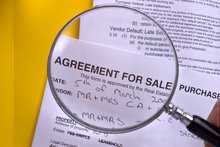
Why Brokers And Real Estate Agents Are Keen To Obtain Listing Agreements

Besides making sales, real estate agents and brokers must have properties to sell. That is why they spend a lot of their time trying to get listings—agreements.

Once the property is sold, both the agent who sold it and the agent who obtained the listing receive a portion of the commission. An agent can increase his or her commission, by listing the property and then selling the same property, without having the share the commission with another agent.

Monday, May 21, 2007

New Zealand Commercial Property Market Good Buying

New Zealand continues to be an attractive place to buy commercial properties due to the continuing strength and stability of the New Zealand Economy. At the time of writing this (June 17 2007), New Zealand does not have a capital gains tax so commercial property investment is an attractive proposition for many.


Under $3Million Commercial Properties In Demand

Property investors will note yields vary depending on the location and the type of property. Yields of 6% to 8% are commonplace in the New Zealand commercial property market with a recent sale in the Wellington region showing a yield of 4.5%. Smaller commercial properties (under NZ$3m) are generally highly sought-after and locations like the Kapiti Coast, just north of Wellington, are particularly difficult to find with some recent sale prices setting record highs.

The May 10, 2007 commercial property auction conducted by Bayleys Commercial reflected strong investor confidence in the Wellington commercial and industrial market and a shortage of quality properties. Two central Wellington buildings have just sold to a local property investor for $33.8m.

Wellington Jewel In The New Zealand Property Crown

Although many overseas buyers have only ever heard of Auckland, Wellington is the jewel in the crown for many savvy property investors including New Zealand and Australian investors aware of the goods returns and soundness of the property market in the Wellington region.

Located at the geographic centre of New Zealand, the Wellington region is made up of four cities - Wellington city, Lower Hutt, Upper Hutt and Porirua - and the Kapiti Coast district. The Wellington region has a population of 460,400 – 11% of the total national population.

A recent survey of building occupancy carried out by commercial property company CB Richard Ellis revealed that the government sector occupies 500,000 square metres of Wellington central business district office space, equal to around 40% of the total office space in Wellington, the capital.

Commercial Property Hot On Fast Growing Kapiti Coast

As already mentioned the Kapiti Coast 45 minutes north of Wellington is HOT property and one of New Zealand's fastest growing areas. The Kapiti Coast is home to around 45,000 people and has a bouyant local economy. The area is popular because of its proximity to the capital city and its relaxed lifestyle options including one of the lower North Islands safest beaches. The Kapiti Coast is also within easy driving distance of the big employment and commercial centers like Porirua, Lower Hutt and Wellington cities.

Commercial property is tightly-held on the Kapiti Coast and properties are generally snapped up quickly if and when they come on the market.